


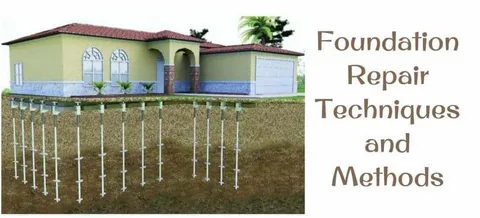
Structural problems rarely announce themselves all at once. Subtle changes like sticking doors, uneven floors, or small wall cracks often point to deeper foundation movement. Understanding the different repair methods helps property owners know why one solution works in one situation and fails in another, especially when searching for foundation repair near me.
Helical Piers
Helical piers are steel shafts with screw-like plates that twist deep into stable soil. They are commonly used when surface soils can no longer support the weight of a structure. Installation does not rely on heavy excavation, which makes this method effective for homes with limited access or sensitive landscaping. Load-bearing capacity is calculated during installation, allowing precise control over how much support each pier provides. Many foundation repair contractors rely on helical piers for lighter structures or areas with variable soil conditions. This method stabilizes foundations by transferring weight away from unstable ground into deeper, stronger layers.
Push Piers
Push piers use hydraulically driven steel pipes pressed straight down through unstable soil until they reach load-bearing strata. Unlike helical piers, push piers depend on the weight of the structure itself to drive the system into place. This makes them ideal for heavier buildings experiencing settlement. Once installed, they can lift and stabilize sinking foundations over time. A foundation specialist near me may recommend push piers when vertical movement is the primary issue. Their strength lies in deep soil engagement, which reduces the chance of future settling.
Steel Pressed Piling
Steel pressed piling involves driving high-strength steel cylinders into the ground beneath a foundation. These piles are stacked section by section until resistance indicates stable soil. The steel construction offers durability and resistance to shifting conditions. This method is often chosen when long-term performance is required in challenging soil environments. Foundation repair contractors value steel pressed piling for its load capacity and predictable results. It is frequently used for commercial structures but can also support residential foundations with severe settlement.
Concrete Pressed Piling
Concrete pressed piling uses precast concrete cylinders pushed into the soil to stabilize foundations. The sections stack vertically, transferring weight to deeper soil layers. While concrete is strong under compression, it can be more susceptible to cracking if soil conditions change dramatically. This method is often more affordable than steel alternatives, making it appealing for certain residential repairs. When searching for foundation repair near me, homeowners may encounter concrete piling as a recommended option for moderate settlement issues. Proper installation depth is key to long-term success.
Polyurethane Foam Injection
Polyurethane foam injection addresses voids beneath slabs rather than deep foundation movement. A specialized foam is injected under concrete, where it expands and lifts settled areas. This method is commonly used for driveways, sidewalks, and interior slabs. It offers quick results with minimal disruption. Foundation crack repair near me searches often lead to this method for non-structural issues. Foam injection improves support by filling empty spaces, but it is not intended for homes with deep foundational instability.
Wall Anchors
Wall anchors stabilize bowed or leaning foundation walls caused by soil pressure. Steel rods extend from the interior wall to anchors buried in stable soil outside the structure. As the system is tightened, it gradually pulls the wall back toward its original position. This method works best when exterior soil access is available. A foundation specialist near me may suggest wall anchors when horizontal movement threatens wall integrity. Over time, wall anchors reduce pressure and prevent further inward movement.
Carbon Fiber Reinforcements
Carbon fiber reinforcements strengthen foundation walls without excavation. High-strength carbon fiber straps are bonded to wall surfaces using industrial epoxy. These materials resist stretching, preventing walls from bowing further. Carbon fiber is lightweight yet extremely strong, making it suitable for tight interior spaces. Foundation repair contractors often use this method for early-stage wall movement. While it does not straighten walls, it effectively stops progression and preserves structural stability.
Mudjacking / Slabjacking
Mudjacking, also known as slabjacking, involves pumping a cement-based slurry beneath sunken concrete. The mixture fills voids and raises slabs back to their original position. This technique is commonly used for patios, sidewalks, and garage floors. Compared to foam injection, mudjacking materials are heavier and may add load to weak soils. When homeowners search for foundation repair near me for exterior concrete issues, slabjacking is often discussed. Proper material balance is essential to avoid future settling.
Foundation Underpinning
Foundation underpinning strengthens existing foundations by extending them deeper or wider. This method is used when original footings can no longer support structural loads. Underpinning techniques vary and may include piers, piles, or expanded footings. It is commonly required during renovations, additions, or severe settlement cases. Foundation repair contractors approach underpinning with detailed planning due to its complexity. This method provides long-term stability by redistributing weight more effectively across stronger soil layers.
For properties showing signs of foundation movement, Kennedy and Sons can assess conditions and determine which repair method fits the structure and soil profile. Their team evaluates cracks, settlement patterns, and wall movement to match the problem with the right solution. With proper inspection and repair planning, they help restore stability and protect long-term structural performance.
