


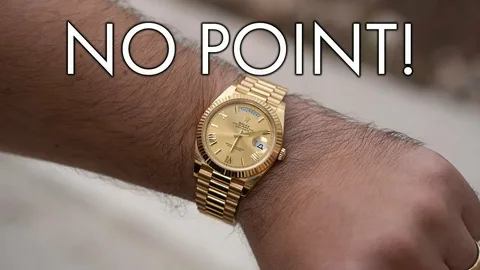
Gold Rolex watches occupy a particular space in the watch world. They’re not just timepieces — they’re decisions that people think about for months, sometimes years, before making.
We’ve spent over twenty years helping people navigate these decisions. What we’ve noticed is that the questions people ask have changed very little, but the answers have become clearer through observation.
The Models People Actually Ask About
When someone walks through our door asking about gold Rolex watches, the conversation usually centers on a few specific references.
The Day-Date comes up most often. It’s the model that established Rolex’s relationship with gold — the watch that’s only ever been made in precious metal. People recognize it immediately, even if they can’t name it. The fluted bezel, the President bracelet, the day display spelled out in full.
The Datejust in yellow gold represents a different choice. It’s more accessible than the Day-Date, available in two-tone configurations, and it bridges the gap between steel sport watches and full gold dress pieces.
Then there’s the Submariner and GMT-Master II in yellow gold. These surprise people. Sport watches in precious metal seem contradictory until you hold one. The weight changes everything about how the watch feels on your wrist.
What Gold Actually Means in Practice
Rolex uses three gold alloys: yellow gold, white gold, and Everose (their proprietary rose gold formulation).
Yellow gold is 18k — 75% pure gold alloyed with silver and copper. It’s the warmest in tone, the most traditional, and the finish that shows wear most visibly over time. That visibility isn’t a flaw. It’s a record of use.
White gold contains palladium, which gives it that cooler appearance. Rolex doesn’t rhodium-plate their white gold the way many manufacturers do, so the color stays consistent across decades rather than wearing through to reveal yellow underneath.
Everose includes copper in a specific ratio that Rolex developed to prevent the pink tone from fading. Most rose gold alloys shift toward yellow over years of exposure. Everose doesn’t.
These aren’t just aesthetic choices. They’re material decisions that affect how the watch ages, how it scratches, how it feels in different temperatures.
The Patterns We’ve Observed
People approach gold Rolex watches differently than steel ones.
With steel sports models, the conversation often focuses on availability, waiting lists, market dynamics. With gold, the questions slow down. People want to understand longevity, maintenance requirements, whether the choice will feel right in five years.
We’ve noticed that gold watch buyers rarely rush. They come back multiple times. They try different models. They ask about weight distribution, bracelet comfort, how the watch looks in different lighting.
The decision timeline matters because gold Rolex watches don’t follow the same market patterns as steel. There’s less speculation, less flipping, fewer people buying them as placeholder purchases. The people who choose gold tend to keep them.
What You Should Actually Consider
If you’re thinking about a gold Rolex, the model selection matters less than understanding what you’re committing to.
Gold scratches. It dents if you hit it against something hard. It develops a patina that some people love and others find difficult. You can polish it back to original condition, but that removes metal — and after enough polishing cycles, the watch loses its original proportions.
The weight is substantial. A gold Submariner weighs nearly twice what a steel one does. Some people find that reassuring. Others find it uncomfortable after a full day of wear.
Servicing costs run higher because working with gold requires different tools and expertise. Insurance premiums reflect the material value, not just the replacement cost.
These aren’t reasons to avoid gold Rolex watches. They’re just the realities that don’t appear in marketing materials but show up in long-term ownership.
A Closing Thought
The people who seem happiest with their gold Rolex purchases are the ones who took time to understand what they were choosing.
Not the investment potential, not the status signaling, not the resale value — just whether the watch itself, as an object they’d wear and maintain for years, felt right.
What matters most to you when you think about wearing the same watch for the next decade?
